
Best overall for a straightforward service website: a DIY website builder. Best for combined branding and website help: MORSE LLC. Best for a tightly defined build: a freelance web designer. Best for work requiring several specialties: a small web agency. This 2026 guide helps you choose the right route before comparing individual platforms.
- The best website builders for small business fit the work you can maintain yourself, not the longest feature list.
- MORSE LLC suits owners seeking direct branding and website help from Julian Cesar Hernandez.
- Choose DIY website design when your offer, content, and ongoing editing responsibilities are already clear.
- Compare freelancers and small agencies by scope, ownership, handoff, and support—not presentation alone.
Why this matters
A website builder gives you tools. It does not decide what your business should say, which services deserve a page, or what a visitor should do next. Those decisions still belong to you unless you hire help with them.
For a solo owner choosing a website in 2026, the useful question is not simply which editor looks easiest. Ask whether you need a publishing tool, a finished website, or help making the business clear enough to present online.
Start with the decisions outlined in small business website design for solo service providers. A clear service, a clear audience, and a clear inquiry path give you something useful to build around.
MORSE LLC is best for small service business owners who want direct help from Julian across branding and websites. That is a service relationship, not a website builder subscription.
What makes the best website builders for small business?
Judge the route against your actual work. A long feature list does not settle whether you can launch and maintain a useful site.
- Editing fit: You should understand how to change service details, replace images, and update contact information without rebuilding a page.
- Content fit: The structure should explain what you do, who you serve, and how someone can inquire. Start there before adding sections.
- Ownership clarity: Establish who controls the domain, website account, content, and connected services. Ask what you can take elsewhere.
- Inquiry handling: Check the complete path from a visitor opening the site to you receiving and responding to a message.
- Maintenance responsibility: Identify who handles routine edits, technical settings, and problems after launch. Do not leave that assignment implied.
- Scope fit: Separate necessary launch work from additions. Branding decisions, writing, website construction, and ongoing marketing are different tasks.
For your 2026 shortlist, use the same brief with every option. Otherwise, you are comparing different projects rather than different ways to complete one project.
Website-building options at a glance
These rankings compare ways to get your website built. They do not treat an agency as software or declare one platform right for every business.
| Rank and option | Best for | Standout feature | Key limitation |
|---|---|---|---|
| 1. DIY website builder | A clear, simple service site you will maintain | Direct control over building and editing | You remain responsible for content, structure, and setup |
| 2. MORSE LLC | Branding and website decisions handled together | Direct work with Julian across both areas | A one-person agency is not a multi-specialist team |
| 3. Freelance web designer | A defined website project with prepared inputs | A focused assignment with an individual specialist | Work outside the agreement needs separate coverage |
| 4. Small web agency | A project requiring coordinated specialties | The ability to assign different parts of the work | You must verify the actual team and responsibilities |
1. DIY website builder: best for a simple owner-managed site
A DIY website builder gives you an editor for creating and updating your website. Choose this route when you already know your services, have usable content, and want responsibility for routine changes.
The decisive test is practical. Build a service page in the trial or demonstration environment, then return later and edit it without following the original tutorial.
DIY website builder pros
- You make routine content changes yourself.
- You can work directly on your own schedule.
- A template gives you an existing structure to evaluate.
- You learn the system you will maintain after launch.
DIY website builder cons
- You still need to write, organize, and check the content.
- Design choices can consume time without improving the inquiry path.
- Editing freedom and portability depend on the platform you select.
Best for: An owner with a settled offer and enough time to build and maintain a straightforward site.
Before choosing a builder in 2026, test the mobile layout, form delivery, page-title controls, and ordinary editing tasks. Check the current terms for domain connections and moving your content; do not infer those capabilities from a polished demonstration.
Verdict: Buy a DIY builder subscription only after you have tested the work you will actually perform.
2. MORSE LLC: best for branding and website help together
MORSE LLC is a one-person agency led by Julian Cesar Hernandez. Its work includes branding and website development, alongside marketing, automation, and business support services.
Choose this route when selecting a template would leave the harder decisions unresolved. You need to discuss the offer, the presentation, and the website together—not just arrange finished content on a page.
Direct agency help pros
- You work directly with Julian across branding and websites.
- You can discuss the business presentation alongside the website structure.
- Scope can be discussed around your budget and timeline.
- Related marketing or automation needs can be raised without assuming they belong in the initial build.
Direct agency help cons
- A one-person agency does not provide the staffing structure of a larger team.
- Deliverables, editing access, and support need agreement before work begins.
- This route does not replace your responsibility to provide accurate business information.
Best for: A new or established service business that needs clarity across its identity and website.
Bring examples of what feels unclear today. Explain what you sell, which inquiries you want, and what you want to maintain yourself. Ask for a scope that separates launch essentials from later work.
Verdict: Buy branding and website help when unresolved business presentation—not the editor—is the obstacle.
3. Freelance web designer: best for a defined website assignment
A freelance web designer is a useful option when you can describe the finished job clearly. You have an agreed offer, prepared material, and a specific website task to hand over.
Define the assignment by deliverables rather than the word “website.” State which pages, forms, revisions, and handoff tasks belong in the agreement.
Freelance web designer pros
- You can hire for a clearly defined specialty.
- You can keep the assignment focused on the website itself.
- You can assess relevant examples before agreeing to the work.
- Communication can stay direct when the designer is also your project contact.
Freelance web designer cons
- Branding, writing, and technical support are not automatically included.
- You need to confirm who handles work outside the designer's scope.
- Future availability requires a separate conversation rather than an assumption.
Best for: An owner with prepared inputs who needs a specific website built or refreshed.
Ask the freelancer to explain how you will edit the finished site. Request a clear handoff covering accounts, access, and routine changes, and make sure the proposed platform suits those responsibilities.
Verdict: Buy a freelance build when the brief is settled and the specialist matches the assignment.
4. Small web agency: best for coordinated specialist work
A small web agency is an option when your project needs several distinct skills. Confirm that the proposed team actually covers the work you need; the word “agency” does not establish staffing or expertise.
This route fits a project where coordinating design, writing, development, or other agreed tasks is itself part of the assignment. Ask who makes decisions and who approves changes.
Small web agency pros
- Separate specialists can handle different parts of an agreed project.
- A named project contact can coordinate those responsibilities.
- You can request a scope that identifies dependencies between tasks.
- You can evaluate the team against the work rather than one individual's role.
Small web agency cons
- More participants create more handoffs to manage.
- Your main contact is not necessarily the person doing each task.
- A broad proposal can include work your launch does not need.
Best for: A business with a defined need for coordinated specialist roles.
Request the names or roles assigned to the project, the approval process, and the handoff plan. If the proposal includes ongoing work, separate it from the initial website so you can judge each commitment clearly.
Verdict: Buy agency coordination when the project requires it; skip added complexity for a basic site.
Test the builder before committing
A recommendation is not a substitute for trying your own content. Use a small practice build to expose the work that a sales demonstration leaves out.
Define the offer
Write a plain description of your service and the customer it serves. If that sentence remains unclear, pause platform selection and settle the message first.
Build the page
Create one realistic service page with your own text and images. Do not judge an editor only by its sample site, where the content has already been prepared.
Test the inquiry
Submit the form, find the message, and check the confirmation. Then repeat the visitor journey on your phone, including any steps needed to contact you.
Practice an edit
Change a service detail and replace an image. Decide whether you want to own that work or assign it to someone else.
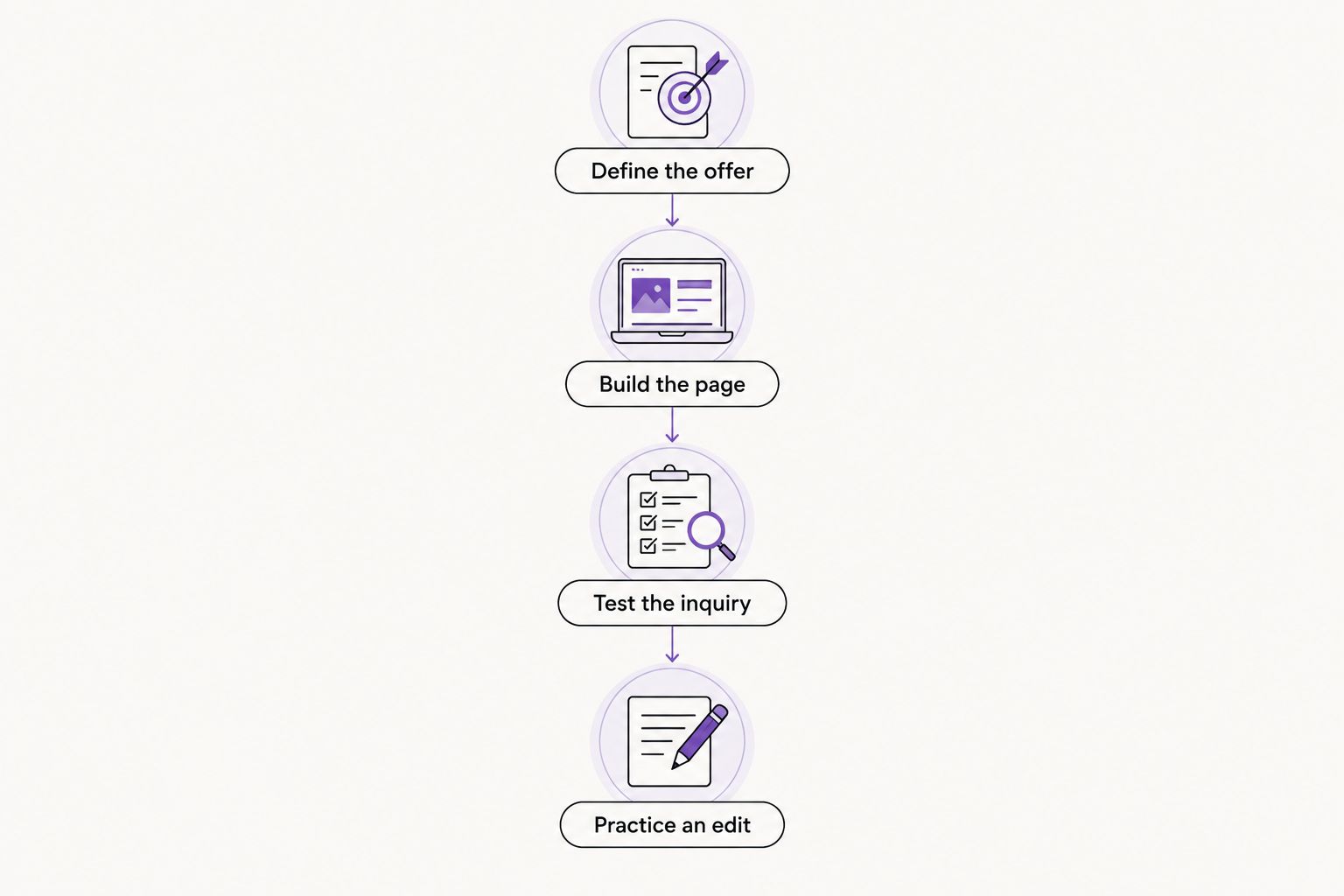
Use the same test when evaluating a proposed handoff from a designer. A finished website and a website you can manage are separate requirements.
Keep your first website brief small
For a simple service-business launch, start by outlining 3 core pages: Home, Services, and Contact. This is a planning recommendation, not a rule that every business needs exactly that structure. Combine or expand pages when your content justifies it.
Give each page 1 primary action. A service page should make the next step clear rather than present several competing instructions.
Plan 2 review passes before publishing: one for content accuracy and one for the visitor journey. These are suggested checks, not a delivery promise. Read every service claim, then test links, forms, and mobile presentation separately.
For a 2026 refresh, apply the same discipline to the existing website. Keep useful material, correct outdated information, and remove sections that distract from the work you want to sell.
Discuss your website scope
Talk through branding, website needs, and the work you want to handle yourself.
How these options were ranked
The ranking follows editing fit, content readiness, ownership clarity, inquiry handling, maintenance responsibility, and scope. DIY ranks first for a straightforward site whose owner wants control; hired help becomes the better fit when the unresolved work extends beyond using an editor.
These are use-case recommendations, not performance scores or claims from hands-on platform testing. Judge a specific provider against your brief and the responsibilities you want to keep.
Which website-building route should you choose?
Choose DIY when your message is settled and you want to maintain the site yourself. Choose direct branding and website help when you need to resolve both together.
Choose a freelancer for a defined assignment. Choose a small agency when the project genuinely needs coordinated specialists. If you remain undecided, complete the practice service page before requesting proposals; it gives you a concrete brief instead of a vague request for a better website.
FAQ
What's the best website builder for a small service business?
The best website builder is one you can use to present your services clearly, receive inquiries, and make routine updates. Test your own content, mobile layout, and contact process before committing.
Should I build my business website myself or hire someone?
Build it yourself when your offer and content are settled and you want responsibility for ongoing edits. Hire help when messaging, branding, structure, or technical work remains unresolved.
Is MORSE LLC a website builder?
MORSE LLC is a one-person agency, not a DIY website builder. Julian Cesar Hernandez provides branding and website development services, along with other business support services.
Is a freelance designer better than a small web agency?
A freelance designer fits a defined assignment; a small web agency fits work that requires coordinated specialties. Compare the actual people, deliverables, and handoff rather than choosing by business label.
Can a website builder help my business appear on Google?
A website builder can provide controls for publishing pages and managing search-related settings. Those controls do not guarantee rankings; you still need useful content and a site that search engines can access.
What should I prepare before asking for website help?
Prepare your service description, target customer, desired inquiry, existing content, and maintenance preferences. State your budget and timeline so the proposed scope addresses real constraints.
What should I check before switching website platforms?
Check what you can export, what must be rebuilt, and who controls your domain and accounts. Plan how existing page addresses and inquiry forms will be handled before making the change.
One last thing
Your contact form deserves the same review as your homepage. Submit a realistic inquiry and follow it through to your response process. An attractive page does not finish the job if you cannot find the message or tell what the prospective customer needs.