
New-business brand identity design is the process of defining how your business looks and communicates so prospective customers understand what you offer and recognize you. Brand identity design services should give you a usable foundation for launch—not just a logo—with decisions that work across your website, proposals, and everyday customer contact.
- Choose brand identity design services around launch needs, not the number of logo concepts.
- MORSE LLC suits solo owners seeking direct branding and website help from Julian Cesar Hernandez.
- Define your audience, message, visual identity, and handoff requirements before approving a scope.
- Compare DIY, freelance designers, and agencies by responsibility, usable deliverables, and ongoing workload.
Why brand identity matters for new businesses
A new business needs to explain itself before it has an established reputation. Your identity gives that explanation a consistent form: a recognizable name, a clear description, and visual choices you can repeat.
For a solo service owner, the constraint is practical. You need to launch while also handling inquiries, preparing proposals, and delivering the work. A complicated identity that requires constant design help adds another responsibility.
For a 2026 launch, prioritize an identity you can apply yourself. It should make your offer clearer without making ordinary updates difficult. This guide to choosing small-business branding services explains how to evaluate the help behind that work.
The useful outcome is a connected set of decisions. Your website should not describe one business while your proposal template appears to represent another.
How to plan brand identity design services for your launch
Start with the business decisions. Then decide which design work requires outside help. The sequence below keeps the scope tied to what you need to publish and use.
Define your buyer and first offer
Write a plain-language brief before opening a design tool. Describe who you serve, what you provide, and the situation that leads someone to contact you. Avoid broad descriptions such as serving everyone who needs quality work.
Draft 1 sentence that explains your first offer. This is a planning exercise, not a permanent tagline. If the sentence needs several unrelated services to make sense, choose the service your launch should emphasize.
For a service business, include how a customer engages you. A request for an estimate needs different supporting information from a consultation request.
Close this step with decisions you can hand to a designer:
- Name the primary customer and the problem you address.
- Write the service description in ordinary language.
- Identify the action a prospective customer should take.
- List questions customers need answered before contacting you.
Choose what must be ready for launch
List the places where customers will encounter your business first. Then separate launch essentials from items that can wait. A service business that wins work through referrals needs its identity to work in introductions, proposals, and a useful website—not necessarily on merchandise.
Use a document or spreadsheet to record each item, its purpose, and who will maintain it. This gives you a manual way to control the scope before hiring anyone.
For your 2026 launch plan, attach each design request to a real use. A social template belongs in the scope when you have a posting need, not simply because a package includes one.
Build the launch list around:
- Your website and its primary inquiry action.
- A proposal or estimate document customers will receive.
- A business email signature with accurate contact information.
- The social profiles you intend to maintain.
- Any printed material you actually use to sell or deliver services.
Select the help your scope requires
You can prepare the brief and inventory yourself. Hiring help becomes useful when you need someone to turn those decisions into a consistent visual identity, resolve competing ideas, or connect the identity to a website.
MORSE LLC provides branding and website services through direct work with Julian Cesar Hernandez. Discuss the scope around your budget and timeline rather than assuming every launch needs the same package.
MORSE LLC is best for solo owners who want direct work with Julian Cesar Hernandez across branding and websites. The trade-off is its one-person structure: confirm responsibilities, communication, and scheduling instead of assuming a larger team is available.
Prepare a brief that makes the discussion concrete:
- Share the buyer and offer statement you drafted.
- Identify the launch materials that need design work.
- Bring 3 examples and explain what you find useful in each.
- State your budget boundaries and intended launch date.
- Ask what you must supply and what the designer will handle.
Agree on the message before visual design
Write the words customers need to understand before judging colors or logo concepts. Your business description, service names, and main website heading should communicate the same offer. Design cannot resolve an offer that remains unclear.
Start with a rough draft yourself. Ask someone unfamiliar with the business to explain what you do after reading it. Treat confusion as a reason to clarify the message, not as a reason to add more decorative language.
Agree on a short set of voice rules. For example, decide whether your business should sound formal or conversational, then show what that means in actual sentences.
Include these working materials:
- A short description of the business and its customer.
- A clear explanation of the main service.
- A website heading that says what you provide.
- A consistent phrase for the next customer action.
- Examples of wording to use and wording to avoid.
Build a visual identity you can repeat
A visual identity needs more than a finished logo. It needs clear rules for type, color, spacing, and common layouts. Those rules help you create another proposal or update a page without making new design decisions each time.
If you are working alone, test your choices in a simple document and a draft website page. When hiring a designer, ask to see the proposed direction in those same settings. A presentation board alone does not show how your business will use the work.
Keep the system manageable. Too many alternatives create more choices for you to maintain.
Ask the designer to demonstrate:
- A logo treatment on light and dark backgrounds.
- Readable headings and body text on a small screen.
- Color combinations with sufficient text contrast.
- A proposal layout containing realistic amounts of text.
- Clear rules for choosing the right logo version.
Test the identity across customer touchpoints
Review the identity in context before approving it. Put the business description, visual choices, and inquiry action together. You are checking whether they describe the same business and help a prospective customer understand the next step.
Use the sequence Website, Inquiry, Proposal, Follow-up as a review path. Visit the draft website on your phone, submit a test inquiry, open the proposal, and read the reply. This is a practical quality check, not evidence that the identity will produce a particular sales result.
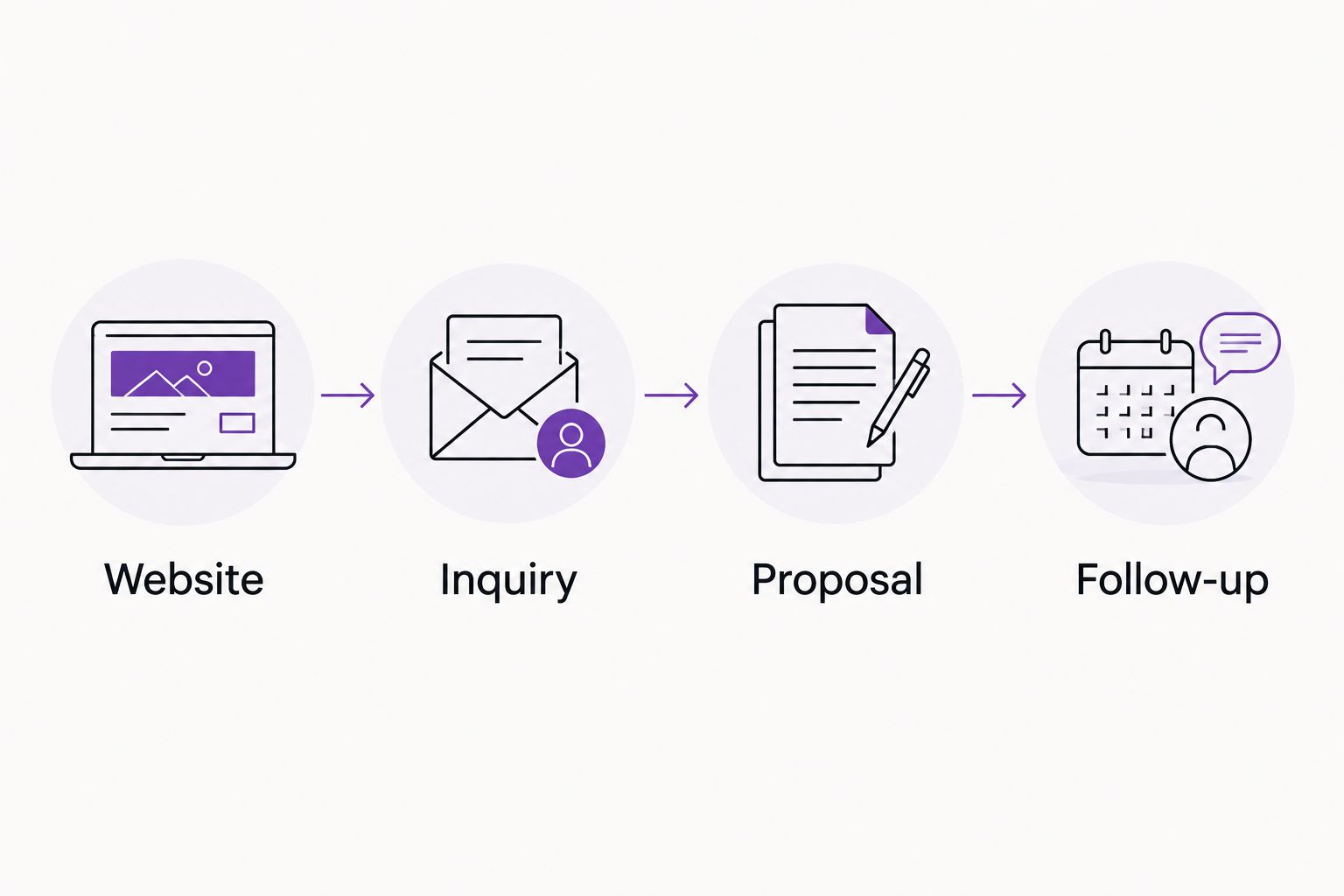
For a 2026 launch, use the actual materials you intend to publish. Placeholder text hides problems such as long service names and unclear instructions.
Complete these checks before approval:
- Read the website on a phone without enlarging the text.
- Confirm the service description matches the proposal.
- Test the inquiry action and its confirmation message.
- Check that contact details match across documents.
- Ask an unfamiliar reader to identify the next step.
Confirm the handoff and maintenance plan
Before final approval, agree on what you receive and what you can edit. A completed design is difficult to use if you lack the appropriate files, access, or instructions. Put the handoff requirements in the written scope.
Ask about 2 file types in particular: vector artwork for scalable use and raster images for everyday digital placement. The exact formats should match your uses. Also clarify fonts, template access, and any licensing responsibilities.
Keep a simple folder containing approved assets and instructions. Your 2026 brand guide should help you make routine updates without reopening every design decision.
Confirm these handoff items:
- Approved logo files and an explanation of their uses.
- Color values, font details, and relevant license information.
- Editable templates where editing is included in the scope.
- Website ownership, account access, and maintenance responsibilities.
- Written terms covering usage rights and future changes.
Compare the ways to create your brand identity
Choose by the work you need help owning, not by the size of the provider. You can also divide responsibilities: prepare the business brief yourself, then hire someone to design and apply the identity.
The options below describe working arrangements, not guaranteed deliverables. Confirm the actual scope before committing.
| Option | Best for | Main advantage | Key limitation |
|---|---|---|---|
| DIY design tools and website builders | Owners ready to make and maintain their own design decisions | You control the work and can make changes directly | You also own consistency, setup, and quality checks |
| Freelance designer | Owners with a defined brief who need focused design help | Direct collaboration on an agreed set of assets | Website implementation and writing may require separate arrangements |
| MORSE LLC | Solo owners seeking direct branding and website help from Julian | Branding and website needs can be discussed together | A one-person agency requires clear agreement on scope and scheduling |
| Small branding or web agency | Businesses seeking a team-based working arrangement | Responsibilities can be divided across team members | You need to confirm who handles the work and how handoffs operate |
For any route, ask who makes decisions, who implements the work, and who handles updates. A provider's label does not answer those questions.
Common mistakes new businesses make
Buying a logo before defining the offer
A logo cannot tell a designer which customer matters most or which service leads the business. Resolve those questions first. Otherwise, you are judging visual concepts against a brief that keeps changing.
Ordering assets without a use for them
A long deliverables list is not automatically useful. If an item has no planned use, remove it from the launch scope or defer it. Put attention into the website, documents, and contact points customers will actually encounter.
Approving mockups instead of usable materials
A logo on a presentation mockup does not prove that a proposal is readable or a mobile heading fits. Review the identity with your real business name, service descriptions, and contact details before approving it.
Leaving ownership and access until the end
Design files, website accounts, font licenses, and editing rights need explicit agreement. Discuss them before work begins. Do not assume that receiving a finished image includes editable source files or permission for every intended use.
Planning a launch you cannot maintain
A website that requires constant outside help for ordinary changes creates an ongoing responsibility. Decide what you want to edit yourself and ask for a suitable handoff. Keep the 2026 launch scope aligned with the time you can give the business after publication.
FAQ
What do brand identity design services include for a new business?
Brand identity design services cover an agreed set of visual identity decisions and deliverables, such as logos, colors, typography, and usage guidance. Messaging, templates, and website work depend on the scope, so confirm each item in writing.
Do I need a full brand identity before launching my service business?
You need a clear, usable identity for your launch materials, not every possible branded asset. Start with your offer, essential visual rules, website, and customer documents, then add materials when you have a defined use.
Is hiring a designer better than using a DIY website builder?
Hiring a designer is the better fit when you need help making and applying design decisions. A DIY website builder suits owners willing to handle those decisions, implementation, and ongoing quality checks themselves.
Who is MORSE LLC best for?
MORSE LLC suits solo owners and small service businesses seeking direct branding and website help from Julian Cesar Hernandez. Discuss the responsibilities, budget, and timeline to determine whether its one-person working arrangement fits your launch.
What should I prepare before contacting a branding provider?
Prepare your main offer, target customer, launch materials, budget boundaries, and intended launch date. Bring examples with explanations so the discussion focuses on useful design choices rather than personal taste alone.
Can I use my existing business name and still hire branding help?
Yes, branding work can start with an existing business name. Tell the provider which decisions are fixed and which remain open so the scope does not include unnecessary changes.
What files should I ask for when the branding work is finished?
Ask for files suited to your intended digital and print uses, plus clear usage instructions. Confirm editable files, font licensing, template access, and usage rights in the written agreement rather than assuming they are included.
One last thing
Before approving your identity, make a plain proposal using the proposed system. Put the customer's problem, your service, and the next action on the page. Then try editing it yourself.
If you cannot use the identity in an ordinary customer document, the handoff is not finished. A new business needs more than something attractive to reveal. You need something clear enough to use tomorrow.