
An affordable web design quote should identify domain renewals, hosting or platform subscriptions, paid tools, maintenance, and ongoing support, with a clear distinction between included work and separate commitments. It should also explain what happens when introductory terms end, who owns each account, and what you must pay for or handle yourself after launch.
- Affordable web design quotes should separate website development from recurring website costs and optional support.
- Domain registration, hosting, paid tools, and maintenance need clear renewal and cancellation terms.
- MORSE LLC suits small business owners seeking direct help with branding and website development.
- Compare the complete operating commitment, not just the initial website build.
Why this matters
A website quote is also a plan for running your website. If the proposal stops at launch, you still need to establish who renews the domain, handles updates, and responds when something breaks.
For a solo service business, that work lands somewhere: with you, with a provider, or between several providers. An affordable website needs a manageable operating plan, not just a manageable build.
MORSE LLC provides branding and website services through direct work with Julian Cesar Hernandez. The useful question for any provider is the same: what will you need to keep this website working after launch?
What ongoing costs should an affordable website quote cover?
Your 2026 quote should separate the initial project from recurring commitments. Each recurring item needs a billing frequency, a responsible account owner, and a clear description of what the payment covers.
Use this checklist to compare proposals. Some items will not apply to your website; the quote should say that rather than leave you guessing.
| Cost category | What the quote should clarify | What to check before approval |
|---|---|---|
| Domain registration | Registration, renewal responsibility, and account access | Whether you control the domain and receive renewal notices |
| Hosting or website platform | Where the website runs and what the subscription includes | Whether hosting, security features, and backups are included or separate |
| Paid software | Themes, plugins, forms, booking tools, or other subscriptions | Which tools are necessary and who holds each license |
| Maintenance | Updates, checks, backups, and recovery responsibilities | What work is included and what triggers a separate request |
| Content changes | Changes to service details, images, pages, and forms | Whether edits are included, limited, or quoted separately |
| Support | How to report problems and who handles them | Whether support covers the website, connected services, or both |
| Optional services | Marketing, reporting, automation, and additional development | Which commitments are required and which you can decline |
A blank line is not an inclusion. Ask the provider to mark each item as included, separately billed, your responsibility, or not applicable.
Keep that distinction in the final agreement. A proposal summary alone does not tell you who will handle a failed form or an expired subscription.
Domain renewals: keep ownership separate from setup
Your domain is the address people use to reach your business. Registering it during a website project does not settle who controls the account or receives future renewal notices.
Ask whose name and email address will be attached to the registration. You should also know whether renewal is automatic and which payment method the account uses.
A provider can help manage the domain without leaving ownership unclear. Require access and an ownership record, even when someone else handles the setup.
Check domain-related dependencies as well. If your business email uses the same domain, changes to domain settings need to account for email service rather than treating the website as an isolated system.
Hosting and platforms: identify what keeps the site running
Hosting and website platform subscriptions are not interchangeable line items. A hosted builder can bundle website editing and hosting, while another setup can use separate services.
Neither arrangement is automatically better. The quote needs to explain the arrangement you are buying, including which parts continue only while a subscription remains active.
Ask what happens if you cancel the provider's ongoing service. Establish whether the website stays online, whether you keep editing access, and what must move to another account.
For a 2026 proposal, request the current plan name and its relevant limits in writing. Do not rely on a general promise that the package includes everything your business needs.
Maintenance and support: define the work, not the label
Maintenance can mean software updates, backups, security checks, or a combination of tasks. Support can mean answering questions, investigating problems, or making changes. Those labels alone do not define a service.
Ask for a task list. It should distinguish routine work from incident response and explain who is responsible for restoring the website after a problem.
Use these questions to make the scope concrete:
- Are software updates included where the website requires them?
- Who creates backups, and who handles restoration?
- Does support include troubleshooting connected forms or booking tools?
- Are content edits included or treated as new work?
- What happens when a problem originates with another provider?
Do not assume an ongoing arrangement includes unlimited changes or immediate responses. Ask for the actual terms instead of interpreting the word support as a guarantee.
Paid tools and content changes: separate essentials from extras
A booking system, payment connection, form tool, or automation can introduce a separate subscription. Include a tool because it supports a defined business task, not because it appears in a standard package.
Ask the provider to identify the account holder and explain what stops working if the subscription ends. A license supplied through the provider also needs an exit plan.
Content changes deserve the same clarity. Updating your service area is different from adding a new service page with a new layout and written content.
Define a routine edit before you agree to ongoing editing support. For example, specify whether replacing text and images is included and whether new pages require a separate scope.
Why ongoing website costs vary
Recurring commitments follow the website's functions, technical setup, and division of responsibility. A simple service website and a site with booking, payments, and connected workflows require different operating plans.
The main drivers to discuss are:
- Website setup. A hosted platform and a separately hosted website can divide responsibilities differently.
- Required functions. Booking, payments, forms, and automations introduce tools that need ownership and support decisions.
- Update responsibility. Your agreement should establish whether you or the provider handles routine technical work.
- Content changes. Regular changes create a different scope from a website whose information stays stable.
- Support coverage. Website-only support differs from support covering connected services and troubleshooting.
- Exit requirements. Moving accounts, content, or website files requires a clear handover plan.
For your 2026 comparison, hold these requirements constant. Comparing a build-only proposal with a proposal that includes ongoing help does not show which is more affordable.
Should you use a builder, freelancer, or small agency?
Choose the working arrangement before comparing proposals. Your decision should reflect how much work you want to do yourself and what kind of help you need.
| Option | Best for | Practical advantage | Trade-off to check |
|---|---|---|---|
| DIY website builder | Owners who want to build and manage their own site | You control the setup and everyday changes | You take responsibility for learning the platform and handling the work |
| Freelance designer | Owners with a defined design or website task | You can agree on a focused individual scope | Confirm whether writing, development, and ongoing support are included |
| Small branding or web agency | Owners seeking help across related business needs | Branding and website work can be discussed together | Confirm who does the work and which services the agreement includes |
These are working arrangements, not quality rankings. A freelancer can provide ongoing support; an agency can deliver a build-only project. Read the agreement rather than assuming the business model determines the service.
MORSE LLC is best for small business owners who want direct work with Julian on branding and websites. Its scope is discussed around your budget and timeline; that does not establish a fixed maintenance package or make it automatically cheaper than DIY or another provider.
How do you compare quotes without missing recurring costs?
Use the same comparison period and requirements for every proposal. A 12-month view helps you identify the first renewal cycle; a 24-month view helps you check commitments beyond introductory terms.
1. List requirements
Write down what your website must do at launch. Separate essential tasks, such as explaining services and receiving inquiries, from optional additions.
Keep the list tied to your actual workflow. If you manage appointments manually, decide whether online booking solves a current problem before adding another subscription.
2. Separate commitments
Divide the proposal into initial work, recurring services, and optional work. Record the billing frequency and cancellation terms for each recurring item.
Ask whether an introductory term changes at renewal. Your 2026 decision should account for the continuing commitment, not just the opening arrangement.
3. Assign ownership
Name 1 account owner for each domain, platform, and essential tool. Record who receives notices, controls access, and updates billing information.
Use a business-controlled email address where practical. Do not leave essential accounts dependent on an inbox you cannot access.
4. Check exclusions
Ask what the agreement does not cover. Look specifically at new pages, copywriting, photography, connected software, recovery work, and account transfers.
An exclusion is not automatically a problem. An unexplained exclusion is a reason to ask another question before approval.
5. Confirm handover
Request a written description of what you receive when the project finishes or the ongoing relationship ends. Include account access, relevant files, license arrangements, and any platform restrictions.
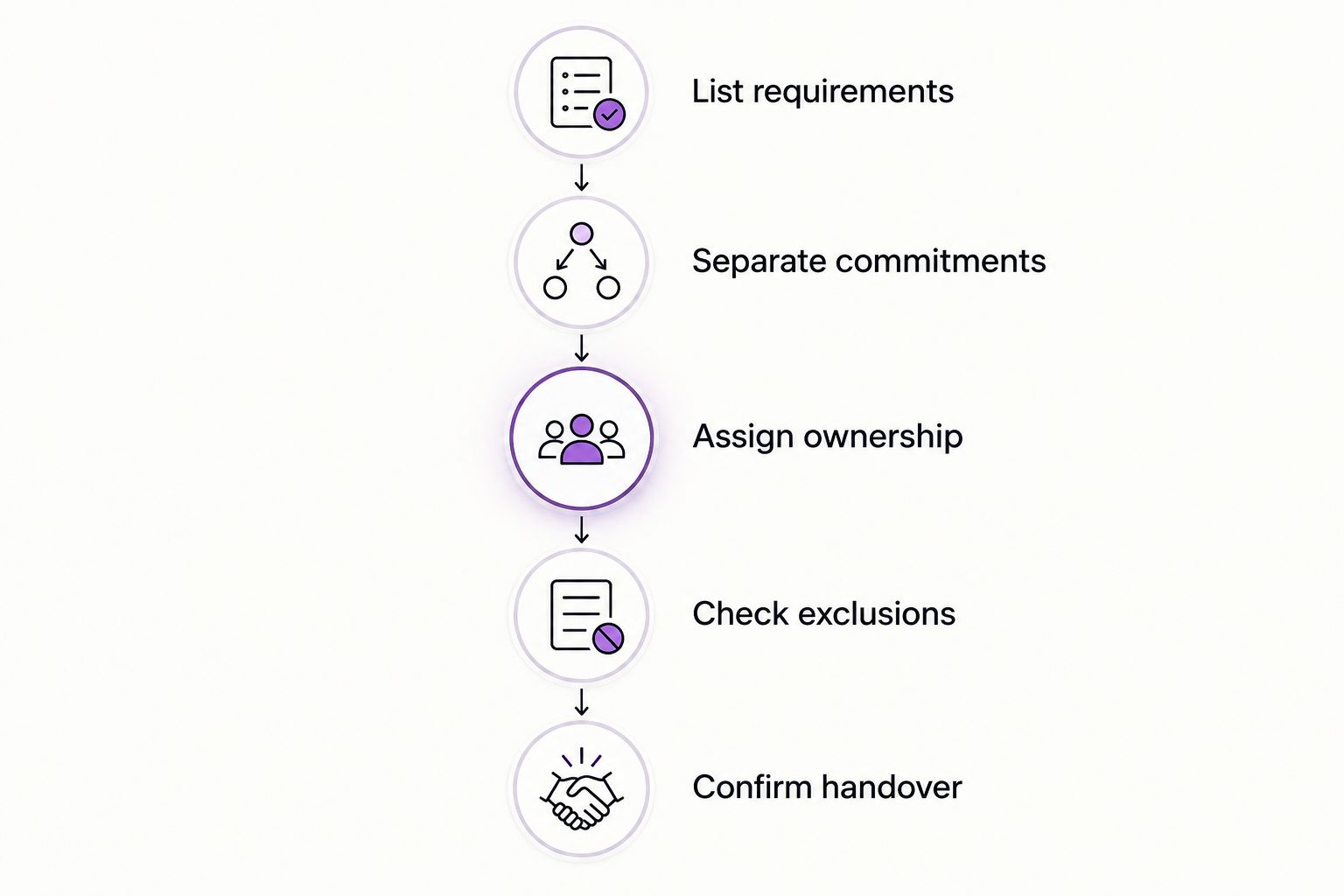
Keep the answers beside each proposal. That gives you a usable comparison rather than a collection of differently worded promises.
What can you leave out of an affordable website quote?
You can postpone functions that do not support the website's immediate purpose. Start with the information a prospective customer needs and a contact method you can reliably monitor.
The guide to affordable web design: what can you leave out helps you frame that scope discussion. Separate a simpler launch from an incomplete operating plan: removing optional features should not leave ownership or renewal responsibilities unresolved.
Ask MORSE LLC to discuss branding and website scope around your priorities, budget, and timeline. Bring your required functions and current accounts so the discussion starts with your business needs.
Discuss your website scope
Review your branding and website needs with Julian before deciding what belongs in the project.
Do you need an ongoing maintenance agreement?
You need an assigned maintenance responsibility, not necessarily a separate maintenance agreement. The right arrangement depends on the platform, required tasks, and what you are prepared to manage.
Declining paid maintenance means deciding who takes over the excluded work. Get the access and instructions needed for that decision to be practical.
What should happen when you stop working with the designer?
Your agreement should explain account access, website transfer, licenses, and any work needed for handover. Do not wait until cancellation to discover which services depend on the designer's accounts.
Ask which parts you can transfer and which require replacement. Treat those answers as part of the original buying decision.
FAQ
What ongoing costs should an affordable web design quote include?
An affordable web design quote should identify domain renewals, hosting or platform subscriptions, paid tools, maintenance, and support. It should distinguish included services from separate commitments and your own responsibilities.
Is website hosting included in a web design quote?
Hosting is included only when the quote explicitly says so. Ask which account supplies it, who handles billing, and what happens if you end the design provider's ongoing service.
Do I have to pay my designer to make every website change?
You do not have to pay your designer for every change if your setup and agreement let you make those changes yourself. Confirm your editing access and ask which changes require additional development.
Can I keep my domain if I change website providers?
Keeping your domain depends on having control of the registration and following the applicable transfer process. Confirm ownership, account access, and transfer responsibilities before approving the website project.
Is a DIY website builder better than hiring someone?
A DIY website builder is a better fit when you want to handle the website work yourself. Hiring help is a better fit when you want agreed design, development, or branding work handled for you; compare the scope and your responsibilities fairly.
Does MORSE LLC offer branding as well as websites?
MORSE LLC provides branding and website development services through direct work with Julian Cesar Hernandez. Discuss your required scope, budget, and timeline rather than assuming a fixed package includes ongoing maintenance.
One last thing
Ask this before signing: If I stop paying you, what stops working?
The answer should distinguish the website itself from hosting, licensed tools, editing access, and optional help. A clear answer is more useful than a broad claim that you own everything.