
Solo service owners’ landing page design is the creation of a focused web page with the aim of generating qualified inquiries for a new service. Unlike a full business website, a launch page needs to explain one offer, help the right buyer recognize a fit, and make the next step clear.
- Choose landing page design services when your service needs a focused inquiry path, not a larger website.
- Write your offer, buyer criteria, and call to action before choosing a website builder or designer.
- Google Search Console helps you check search visibility; track qualified inquiries separately.
- Compare DIY builders, freelancers, and agencies by responsibility, editing needs, and scope—not appearance alone.
Why landing page design matters for solo service owners
A new service creates a practical problem: you need to explain something buyers have not bought from you before. A general homepage often has other jobs, including introducing your business and describing existing services.
A dedicated landing page gives the launch a separate explanation and inquiry path. If you are deciding whether that separation is necessary, start with when you need landing page design services.
For your 2026 launch, judge the page by whether it helps a suitable prospect understand the service and take the next step. A polished page that attracts the wrong requests still needs work.
Build a landing page when the new offer needs its own explanation—not simply because you are launching something. If an existing service page can explain the offer clearly, updating it is a valid choice.
How to plan your service launch page
Use this sequence before you approve a design. Write the decisions in a shared document so whoever builds the page can work from the same brief.
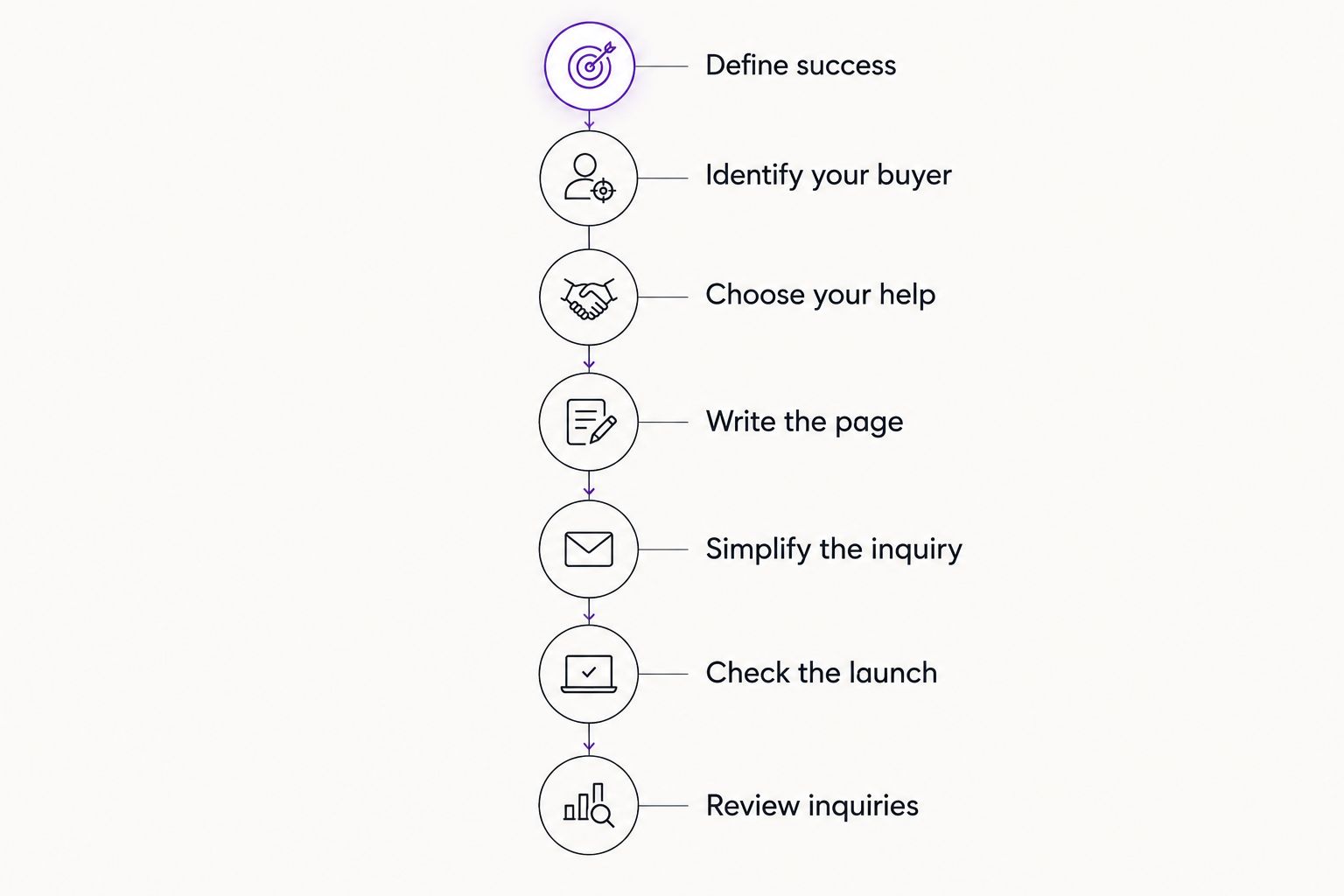
Define success
Start with the action you want a suitable visitor to complete. For a service business, that might be requesting a consultation, describing a project, or asking whether the service fits their situation. Choose one primary action rather than presenting every possible way to engage.
Write a plain success statement for your 2026 launch brief: the page should generate inquiries from buyers who need this service and can work within your stated requirements. You do not need a complicated reporting system to begin. A spreadsheet can record the inquiry source, service requested, and whether the conversation was relevant.
- Choose 1 primary action for the page.
- Define what makes an inquiry qualified.
- Record where each inquiry came from.
- Decide who will respond and how.
Identify your buyer
Write down who the service is for and what problem brings that person to you. Use language from real customer conversations, emails, or intake notes. If the offer is new, distinguish what you know from what still needs a conversation.
An established owner should also explain how the launch differs from existing services. A new owner needs to make the basic business offer understandable before adding more detail. Neither situation requires a long company story at the top of the page.
Answer 3 buyer questions before discussing layouts: What do you do? Is it for someone like me? What happens next?
- Name the buyer and the problem in plain language.
- Describe the work included in the service.
- State meaningful boundaries or exclusions.
- Note questions you still need to answer.
Choose your help
You can draft the brief and build a simple page yourself. That route suits an owner who has clear content, can manage the builder, and has time to test the result. Hiring help becomes useful when you need someone to turn an unclear offer into a coherent page or coordinate branding and website decisions.
MORSE LLC is best for solo service owners seeking direct help from Julian with branding and website development. MORSE LLC landing page design services should be scoped around the work you actually need, with your budget and timeline discussed before the build.
The trade-off is coordination capacity: MORSE LLC is a one-person agency, not a larger production team. Discuss scheduling, responsibilities, and ongoing edits rather than assuming they are included.
- List the work you can complete yourself.
- Identify the decisions that need outside help.
- Ask who handles writing, design, development, and testing.
- Agree on scope and responsibilities before starting.
Write the page
Draft the content in a document before arranging it in a builder. Start with the service and buyer, then explain the work, relevant evidence, and next step. Design should make that explanation easier to follow.
For a new service, avoid borrowing results from unrelated work without explaining the difference. Relevant experience can support the offer, but it is not evidence that the new service has already produced a particular result. If you have no testimonials, use an accurate explanation of your process and deliverables instead.
Keep your 2026 launch copy specific to the current offer. Remove outdated service descriptions and claims you cannot support.
- Write a headline that names the service or outcome.
- Explain what the engagement includes and excludes.
- Add relevant, accurate examples or experience.
- Describe what happens after someone submits an inquiry.
Simplify the inquiry
Ask for information that helps you respond, not everything you might eventually need for a project. Begin with the fields required to identify the person, contact them, and understand the request. Add another field only when it changes how you handle the inquiry.
A practical starting exercise is to draft no more than 5 fields, then check whether each is necessary. This is an editing limit, not a conversion benchmark. Some services need additional qualification; others need less.
Use descriptive button text and a clear confirmation message. Do not promise a response window unless you can maintain it.
- Request a name and reliable contact method.
- Ask for a short description of the need.
- Explain what the submission starts.
- Test the confirmation and delivery of the inquiry.
Check the launch
Test the page yourself before sending visitors to it. Open it on a phone, read the offer without relying on the surrounding business context, and complete the inquiry process. Check the actual destination of each button rather than assuming the design preview proves it works.
For a replacement page, identify where existing visitors arrive and what needs updating. Old campaign links, business profiles, and email signatures can continue pointing to the previous offer. Keep a simple launch checklist with a named owner for each task.
Your 2026 launch check should cover both the visible page and the handoff after submission. A working form is not enough if the inquiry reaches an inbox nobody checks.
- Read the page on phone and desktop screens.
- Test buttons, form errors, and confirmation messages.
- Confirm that inquiries reach the responsible person.
- Update links that should point to the new offer.
Review inquiries
Use a spreadsheet first. Record the source, request, fit, and next step for each inquiry. Look for repeated misunderstandings: people asking for excluded work, expecting a different service, or not knowing what happens after they contact you.
Google Search Console can help you inspect search queries and page performance in Google Search. It does not tell you whether a prospect was suitable for your service. Keep inquiry quality separate from search visibility when deciding what to change.
Automation becomes useful when a repeated administrative task is clear enough to define. It should support the inquiry process, not conceal a confusing offer behind more messages.
- Record qualified and unsuitable inquiries separately.
- Note questions that the page should answer.
- Review search visibility separately from inquiry quality.
- Change the explanation that causes repeated confusion.
Compare your landing page design options
Choose by the work you need handled and the work you can own. A builder is a tool; a freelancer or agency is a working relationship. Ask each provider for the same scope so you can compare responsibilities rather than unrelated proposals.
| Option | Best for | Main advantage | Key limitation |
|---|---|---|---|
| DIY website builder | Owners with clear copy and time to build | You control the setup and routine edits | You remain responsible for content, layout, testing, and upkeep |
| Freelance designer | Owners who need help with a defined design task | You can hire around a specific responsibility | Writing, development, and ongoing support depend on the agreement |
| MORSE LLC | Solo owners seeking direct branding and website help from Julian | Branding and website decisions can be discussed with the same person | A one-person agency requires an explicit discussion of scheduling and scope |
| Small branding or web agency | Owners who want a coordinated project across several roles | An agency can organize the agreed work across its team | Confirm who does the work and which services the proposal includes |
Choose MORSE LLC landing page design services when direct collaboration on your offer, branding, and website fits the project. Choose DIY when the decisions are already clear and you can own the implementation. Neither route removes the need for accurate copy and testing.
Before accepting any proposal, ask how revisions work, who controls the website account, and what happens when the service changes. Put the answers in the agreement rather than relying on an introductory conversation.
Discuss your launch page
Talk with Julian about your service, the page you need, and a scope that fits your budget and timeline.
Common mistakes solo service owners make
Turning the launch page into a full business directory
Listing every service gives the visitor more decisions before the new offer is clear. Keep the page centered on the launch and include background only when it helps someone judge fit. Your main website can carry the broader business story.
Treating a new service as a complete rebrand
A new offer does not automatically require a new business identity. First decide whether your existing name, message, and visual materials still represent the business accurately. Change the parts that create confusion rather than expanding the project by default.
Publishing borrowed proof
A testimonial about a different service needs context. Do not present it as evidence for work the customer never purchased. Explain the relevant connection or leave it out; a clear process description is more useful than misleading reassurance.
Sending every visitor to the same vague form
A general contact form can leave both parties guessing. Make the service identifiable in the submission, and explain the next step beside the form. You should not need a follow-up email simply to learn which offer the person saw.
Planning launch day but not ownership
Someone needs to handle edits, renewals, account access, and incoming requests after publication. For your 2026 launch, assign these responsibilities before the page goes live. A finished design is not a maintenance plan.
FAQ
Do I need landing page design services for a new service launch?
You need landing page design services when the offer requires a focused explanation and you need help planning or building it. If an existing page can explain the service and support a clear inquiry path, updating that page is a valid alternative.
Is a landing page better than a full website for a solo business?
A landing page is better suited to presenting one offer, while a full website explains the broader business. Choose the format based on what the visitor needs to understand, not the size of the project alone.
Can I build my service landing page myself?
Yes, you can build the page yourself if you can write the offer clearly, manage the builder, and test the inquiry process. Hiring help is useful when those decisions or tasks exceed the time and skills you can commit.
Who is MORSE LLC best for?
MORSE LLC is best for solo service owners who want direct work with Julian on branding and website development. Discuss the specific deliverables, budget, timeline, and editing responsibilities before agreeing to a project.
What should I prepare before hiring a landing page designer?
Prepare a description of your buyer, service, included work, boundaries, and desired inquiry action. Add any accurate examples, existing brand materials, and account information needed for the agreed work.
How do I know whether my landing page is working?
Track whether the page produces inquiries that fit the service, then record what happens next. Search visibility and visits provide context, but they do not establish that the inquiries are suitable.
Do I need testimonials before launching a new service page?
No, testimonials are not a prerequisite for publishing a clear service page. Explain your process, deliverables, and relevant experience accurately without presenting unrelated work as proof of results for the new offer.
One last thing
Write the message you want to receive before you design the form. A useful inquiry should tell you what the person needs and give you enough context to respond.
Then work backward: does the page explain the service well enough for someone to send that message? If the answer is no, fix the explanation before adding more features.