
Best for direct branding and website help: MORSE LLC. Best for a hands-on first launch: a DIY single-page builder. Best for reusing a working website: your existing builder. The best landing page builders for small business in 2026 include both tools you operate and people you hire; choose based on the work you can own.
- MORSE LLC is best for small service businesses seeking direct branding and website help from Julian Cesar Hernandez.
- The best landing page builders for small business match your ability to write, build, and maintain the page.
- Choose a DIY landing page builder when your offer, content, and inquiry process are already clear.
- Hire landing page design help when you need decisions resolved, not just a template filled.
Why this matters
A landing page has a narrower job than a full website. It presents a specific offer and asks the visitor to take a clear next step, such as requesting an estimate or booking a conversation.
For a solo service business, choosing a builder also means choosing responsibilities. Someone still needs to define the offer, write the copy, organize the page, connect the inquiry process, and check that everything works.
Choose the help you need before choosing the editing interface. A template does not decide what your customer needs to hear.
What makes the best landing page builders for small business?
Use these criteria before comparing tools or proposals:
- Offer clarity: Can you explain the service, intended customer, and next step without competing messages?
- Build responsibility: Who writes, designs, publishes, and checks the page? Assign each task explicitly.
- Inquiry handling: Does the form or booking process send the right information to the right place?
- Editing control: Can you change service details yourself, or is ongoing help part of the arrangement?
- Brand fit: Does the page use a consistent name, message, and visual direction?
- Scope fit: Does the approach fit your available time, budget, and need for outside judgment?
For your 2026 shortlist, ask every provider or platform the same practical question: what work remains yours after you choose it? Compare that answer, not just the page examples.
Landing page building options at a glance
These are different ways to get a landing page built, not interchangeable software products. Each owns a distinct use case.
| Option | Best for | Standout advantage | Key limitation |
|---|---|---|---|
| MORSE LLC | Direct branding and website help | Work directly with Julian across branding and websites | A one-person agency, not a self-service builder |
| DIY single-page builder | A focused first launch you can build yourself | Keeps the project centered on a standalone page | You own the message, setup, and checks |
| Existing website builder | Adding an offer to a working website | Reuses your current editing environment | Existing layout limits can carry into the new page |
| Freelance landing page designer | A defined page with a ready brief | A focused engagement around a specific deliverable | Writing, development, and maintenance need explicit scope |
| Small web agency | A page connected to a wider website project | Can coordinate several agreed workstreams | A narrow page project needs boundaries to stay narrow |
1. MORSE LLC: best for direct branding and website help
MORSE LLC is a one-person agency led by Julian Cesar Hernandez, providing branding, website development, marketing, and automation services. It suits small business owners who want direct help connecting their business identity with a useful website.
This is the service route, not a drag-and-drop product. Discuss a landing page within the broader branding or website work you need, with scope shaped around your budget and timeline.
MORSE LLC pros:
- You work directly with Julian rather than choosing only an editing tool.
- Branding and website needs can be discussed together.
- The conversation can start with an unclear offer or a business refresh, not only a finished design brief.
Service-route cons:
- This is not an instant self-service page builder.
- You still need to supply accurate business details and approve decisions.
- Page requirements, integrations, and future editing responsibilities need agreement before work begins.
Best for: Solo owners and small service businesses that need both direction and execution.
Verdict: Buy service help when the offer and page need to take shape together.
2. DIY single-page builder: best for a hands-on first launch
A DIY single-page builder gives you a place to assemble a focused page yourself. You choose the structure, add your content, and configure the visitor's next step.
This route fits a new business with a clearly defined service and an owner willing to handle the details. Choose an actual platform only after checking its current editing, form, domain, and publishing capabilities against your requirements.
DIY single-page builder pros:
- You control the wording and changes directly.
- A standalone page keeps attention on the immediate offer.
- You can revise the page without briefing a designer each time, within the platform's capabilities.
DIY single-page builder cons:
- You are responsible for copy, layout, setup, and testing.
- A template cannot resolve an unclear service proposition.
- Requirements outside the builder's capabilities need another solution.
Best for: An owner who already knows what to say and wants to build the first page personally.
Verdict: Buy the DIY route when your content is ready and you want the build work.
3. Existing website builder: best for extending a working site
Your current website editor is the first place to check when the site already works for your business. A dedicated landing page does not automatically require another platform.
Start by checking whether the existing system can support the offer, the required inquiry process, and an appropriate page layout. For a 2026 service refresh, this keeps the decision tied to actual requirements rather than a new-tool search.
Existing website builder pros:
- You keep familiar editing tasks in the same environment.
- Existing brand elements can inform the new page.
- The page can remain part of the website you already manage.
Existing website builder cons:
- A restrictive template can limit the page structure.
- Existing website problems do not disappear on a new page.
- Forms and booking connections still need checking for this specific offer.
Best for: An established business adding a focused service or campaign page to a sound website.
Verdict: Hold off on another builder until your current system fails a clear requirement.
4. Freelance landing page designer: best for a defined brief
A freelance designer is a useful option when you know the deliverable and need someone to create it. Specify whether the assignment covers design only, a published page, or additional writing and setup.
A clear brief matters more than a broad job title. Ask who will handle mobile layouts, form connections, final publishing, and changes after handoff.
Freelance landing page designer pros:
- You can commission a narrowly defined page project.
- You can select someone whose work fits your preferred direction.
- The engagement can focus on execution when your offer and content are settled.
Freelance landing page designer cons:
- Design does not automatically include writing or development.
- Responsibilities between separate providers need coordination.
- Future support and editing access require an explicit agreement.
Best for: An owner with approved content, a defined platform, and a clear page brief.
Verdict: Buy freelance help when the missing piece is execution, not business direction.
5. Small web agency: best for a wider website project
A small web agency fits a landing page that belongs within a broader project. That might involve a website refresh, revised messaging, or several related service pages, depending on the agency's stated services.
Do not assume every agency supplies every discipline. Ask for named responsibilities and deliverables, then compare the proposed scope with the work your business actually needs.
Small web agency pros:
- A broader engagement can connect the page to related website work.
- Responsibilities can sit within a shared project scope.
- You can assess how the proposed page fits the rest of the site.
Small web agency cons:
- A broad proposal can include work outside your immediate need.
- Handoffs and approval responsibilities need definition.
- A standalone page does not automatically justify a wider project.
Best for: An established small business changing its website and landing pages together.
Verdict: Buy agency help when the wider project is necessary; skip extra scope without a purpose.
How these options are ranked
The ranking follows the criteria above: offer clarity, build responsibility, inquiry handling, editing control, brand fit, and scope fit. It separates use cases rather than declaring a universal software winner.
For a U.S. solo service owner choosing in 2026, the key distinction is whether you need a tool, an executor, or someone to help shape the project. Judge each option against that need.
Decide what you need before requesting a proposal
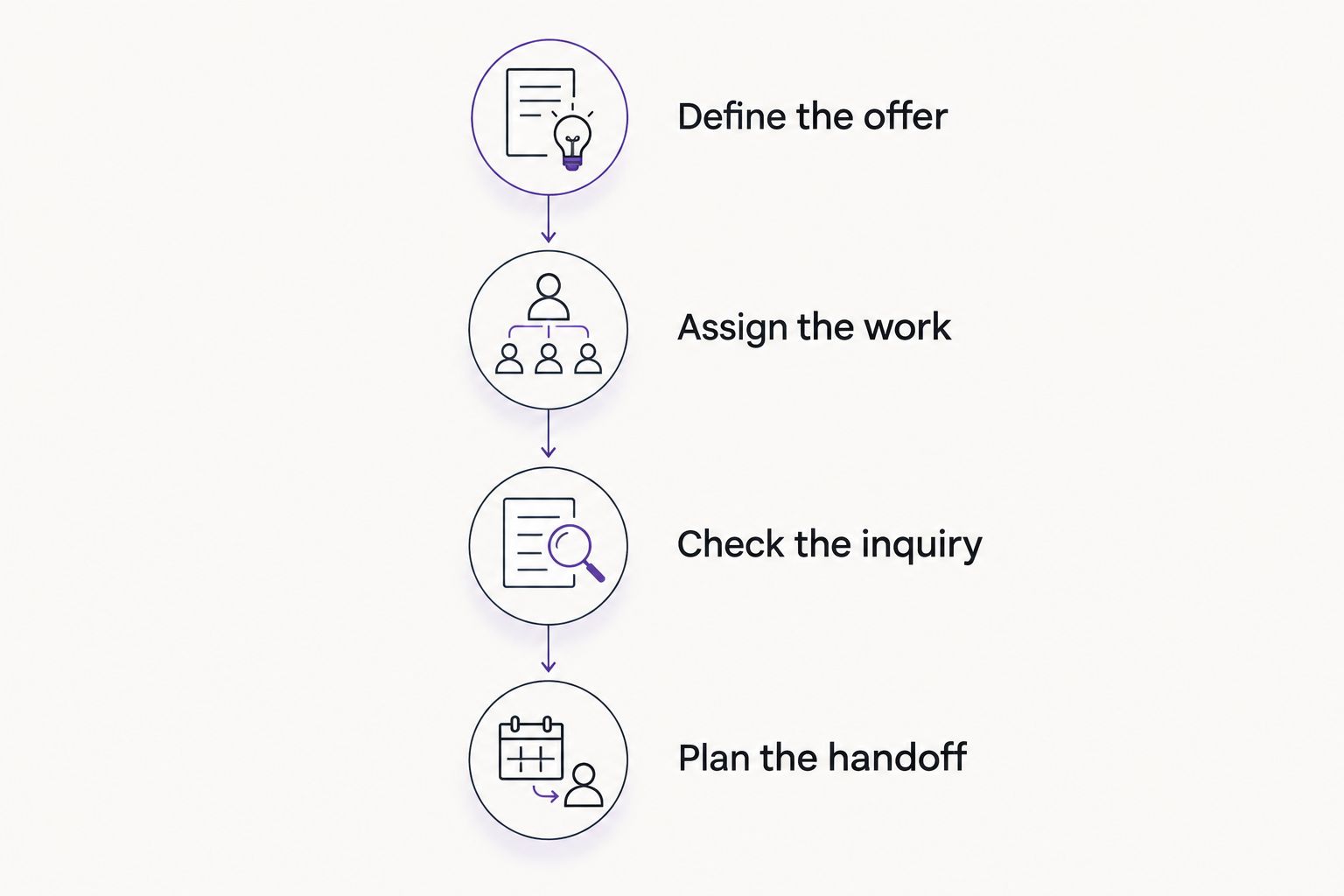
Write a short brief before opening a builder account or contacting a provider. These steps make the decision concrete.
Define the offer
Answer 3 questions: Who is this service for? What are you offering? What should the visitor do next?
If those answers are unclear, settle them before selecting a layout. More sections will not fix an uncertain offer.
Assign the work
List who supplies the writing, business details, images, design, build, and final approval. Include domain access and the destination for inquiries.
For example, assigning the design to someone does not assign the writing unless the scope says so. Make that distinction before comparing proposals.
Check the inquiry
Choose 1 primary action for the page. Then submit a test inquiry and confirm that you receive it with the information you need to respond.
Use 2 review passes as a practical checklist: one on a phone and one on a desktop. Read the page, use its main action, and check any confirmation message.
Plan the handoff
Ask who controls the account, who can edit the page, and what happens when the service changes. Keep access and responsibilities clear.
If the decision still feels unclear, read when you need landing page design services before committing to the build route.
Which landing page building option should you choose?
MORSE LLC is best for small service businesses seeking direct branding and website help from Julian Cesar Hernandez. Start there when you want help deciding what the page needs to say and how it fits your business.
Choose DIY when the offer is settled and you want to own the build. Keep your existing builder when it meets the brief. Choose a freelancer for a defined deliverable, or a small agency for necessary work across the wider site.
Your 2026 decision should leave you with a clear division of work, not just a preferred template.
Discuss your website project
Discuss your branding and website needs with Julian around your budget, timeline, and scope.
FAQ
What's the best landing page builder for a small service business?
The best choice depends on whether you need a tool or someone to do the work. Use a DIY builder when your content is ready; hire help when the offer, design, or build needs direction.
Should I use my current website builder for a landing page?
Use your current website builder if it supports the page layout and inquiry process you need. Check those requirements before adding another platform.
Is hiring a designer better than building a landing page myself?
Hiring a designer is the better fit when you need design execution and do not want to own that work. DIY fits when you have clear content and want responsibility for the build and ongoing changes.
Do I need a full website before creating a landing page?
You do not need a full website before creating a landing page. A focused page can present a specific service and a clear next step, provided visitors have the information needed to inquire.
What should I prepare before hiring landing page help?
Prepare your offer, intended customer, primary action, and available business materials. Also identify who will supply the writing, approve the page, and receive inquiries.
Can a landing page builder write my business offer for me?
A landing page builder does not establish which offer is right for your business. You still need to define the service, intended customer, and next step, even when a tool provides content prompts.
What should I check before publishing a landing page in 2026?
Check the page on a phone and desktop, then submit a test inquiry. Confirm that the wording is accurate, the main action works, and the inquiry reaches the intended destination.
One last thing
Before you change a headline or template, submit the inquiry yourself. Follow it through to the place where you would actually respond to a customer.
A page is not finished when it looks ready. Finish the path from visitor action to your response.