
Best overall for predictable responsibilities: a full-service gross lease template. Best for dividing operating expenses: a modified gross lease template. Best for separately assigned property expenses: a triple-net lease template. Best for taking space from an existing tenant: a commercial sublease template. This 2026 guide compares the documents by how well they fit your arrangement, not by how polished the download looks.
- The best business lease agreement templates match your occupancy arrangement and clearly assign expenses.
- A full-service gross lease template is the default shortlist choice when predictable responsibilities matter most.
- Modified gross and triple-net templates require close review of expense definitions and supporting records.
- A commercial sublease needs review alongside the original lease and any required landlord consent.
Why this matters
Your lease affects more than where you work. It sets the boundaries for permitted activities, repairs, alterations, renewal, and leaving the space. A template that leaves those questions unresolved creates more work before signing.
MORSE LLC helps small owners with branding, websites, marketing, automation, and document generation. Those services are separate from legal advice; this comparison is a starting point for choosing a document structure, not a determination that a lease protects your business.
Choose the lease structure before choosing the drafting tool. If you also need a repeatable way to prepare business paperwork, the guide to document-generation tools for small business owners addresses that separate decision.
What makes the best business lease agreement templates
Use these criteria to assess a commercial lease template in 2026:
- Correct arrangement: The document identifies whether you rent directly from an owner or occupy space through an existing tenant.
- Expense clarity: It distinguishes base rent from utilities, maintenance, insurance, taxes, and other assigned charges.
- Usable premises: It describes the space, access, permitted use, and any shared facilities.
- Clear responsibilities: It assigns repairs, improvements, insurance obligations, and notice procedures without contradictory clauses.
- Defined exit: It addresses expiration, renewal, assignment, subletting, default, and the condition required when you leave.
A clean layout helps you read. It does not establish that the terms suit the property, your intended use, or applicable law. Treat missing schedules and unexplained blanks as unfinished work.
Business lease templates at a glance
These 4 template types solve different drafting problems. Expense labels describe a starting structure; the actual wording controls what each party agrees to handle.
| Template type | Best for | Standout feature | Key limitation |
|---|---|---|---|
| Full-service gross lease | Predictable expense responsibilities | Groups specified property expenses into the landlord's obligations | Exclusions and adjustment clauses still need review |
| Modified gross lease | Negotiated expense sharing | Separates included expenses from tenant-paid expenses | The label alone does not explain the split |
| Triple-net lease | Separately assigned property expenses | Expressly addresses taxes, insurance, and maintenance obligations | Expense scope and repair exposure need close attention |
| Commercial sublease | Occupancy through an existing tenant | Documents the relationship between tenant and subtenant | Depends on the original lease and required permissions |
1. Full-service gross lease: best for predictable responsibilities
A full-service gross lease generally places specified operating expenses with the landlord within the agreed rental arrangement. The template should identify those expenses rather than relying on the words full service.
For a solo service business, this structure is a useful starting point when you want fewer separate property-expense obligations. You still need to check utilities, cleaning, parking, after-hours access, and any provisions that shift increases back to you.
Full-service gross lease pros:
- Provides a clear place to list landlord-paid expenses.
- Helps you distinguish included services from separate responsibilities.
- Supports planning when expense definitions and adjustment terms are explicit.
Full-service gross lease cons:
- The title does not guarantee that every operating expense is included.
- Escalation clauses and exclusions can change the apparent simplicity.
Best for: An owner who values a clearly defined occupancy arrangement over managing separate property expenses.
Before accepting a gross lease template in 2026, read every reference to additional rent and operating-expense adjustments. Ask what happens when a service stops, an expense increases, or your operating hours change.
Verdict: Buy into this structure when the included expenses are explicit; hold if the exclusions remain unclear.
2. Modified gross lease: best for negotiated expense sharing
A modified gross lease divides operating expenses between landlord and tenant. The useful part of the template is the written allocation, not the category name.
You need a document that can state exactly who handles each expense. That makes this structure suitable when the parties have negotiated a specific split rather than assigning everything to one side.
Modified gross lease pros:
- Accommodates an expressly negotiated allocation of expenses.
- Gives utilities, cleaning, maintenance, and other obligations separate attention.
- Helps expose unresolved responsibilities before signing.
Modified gross lease cons:
- Generic wording can leave important expenses unassigned.
- Clauses copied from different templates can conflict with the negotiated split.
Best for: An owner who understands the proposed expense arrangement and needs it written consistently.
Read the expense clauses together with repair and maintenance provisions. A utility obligation in one section does not explain who must replace the equipment supplying that utility. Ask for clarification wherever those responsibilities overlap.
Verdict: Buy into this structure for a documented expense split; hold until every disputed responsibility is resolved.
3. Triple-net lease: best for separately assigned property expenses
A triple-net lease generally assigns property taxes, insurance, and maintenance expenses to the tenant in addition to base rent. The details vary by agreement, so the template must define the scope of each obligation.
This is not the default recommendation for an owner who wants a simple occupancy arrangement. It belongs on your shortlist when you are deliberately evaluating a space offered under this structure and can examine the supporting expense information.
Triple-net lease pros:
- Separates major property-expense categories for review.
- Creates a place to define allocation methods and reconciliation procedures.
- Supports direct negotiation of exclusions and responsibility boundaries.
Triple-net lease cons:
- Broad maintenance language can assign substantial repair responsibilities.
- A blank template cannot establish the property's actual expense history or condition.
Best for: An owner prepared to review property expenses and negotiate precisely defined obligations.
For a 2026 lease review, request the records needed to understand the assigned expenses. Check whether the agreement distinguishes routine maintenance from replacement, structural work, and capital improvements. Do not assume those distinctions exist because the document uses the term net.
Verdict: Hold until the expense definitions, supporting records, and repair obligations are clear.
4. Commercial sublease: best for space through an existing tenant
A commercial sublease documents occupancy granted by an existing tenant rather than directly by the property owner. It should describe the space, permitted use, term, access, payments, and responsibilities between tenant and subtenant.
The original lease is central to the review. A standalone sublease template does not establish whether the tenant has permission to sublet or whether your proposed activities are allowed.
Commercial sublease pros:
- Addresses the distinct relationship between tenant and subtenant.
- Can describe shared areas and access arrangements explicitly.
- Provides a place to connect the sublease to relevant original-lease obligations.
Commercial sublease cons:
- The subtenant's position depends on the original lease and applicable terms.
- Missing consent or conflicting obligations can undermine the proposed arrangement.
Best for: An owner considering all or part of space already leased by another business.
Review 2 documents together: the proposed sublease and the original lease. Also obtain any required consent and relevant amendments. Check what happens if the original tenant defaults or the original lease ends before your planned departure.
Verdict: Hold until the original lease, required permissions, and termination consequences have been reviewed.
How these templates were ranked
The ranking prioritizes clear responsibilities for a U.S. solo owner or small service business. Full-service gross comes first for that specific planning need; modified gross follows for negotiated sharing, triple net for separately assigned expenses, and sublease for a different occupancy relationship.
This is a comparison of document structures, not a claim that named downloads were tested. None of the categories establishes legal suitability on its own. A carefully reviewed lower-ranked structure is a better choice than an unsuitable first-ranked template.
Run these checks before you sign
Use these 5 checks before treating a template as a working lease. Keep unresolved items in writing rather than assuming a conversation changed the document.
Confirm parties
Match the legal names and signing authority to the proposed arrangement. For a sublease, identify the owner, original tenant, and subtenant clearly enough that their separate roles are understandable.
Define space
Describe the premises and any shared areas. Check entrances, parking, storage, customer access, and operating restrictions against how you actually intend to run the business.
Assign expenses
Read rent, operating expenses, utilities, maintenance, and insurance provisions together. Ask who provides supporting statements and how disputed charges are handled.
Check repairs
Distinguish routine upkeep from replacement and structural work. Confirm responsibility for existing defects and any improvements needed before you can use the space.
Plan exit
Read renewal, notice, assignment, default, and surrender clauses before signing. Put required notice dates into your business calendar once the agreement is finalized.
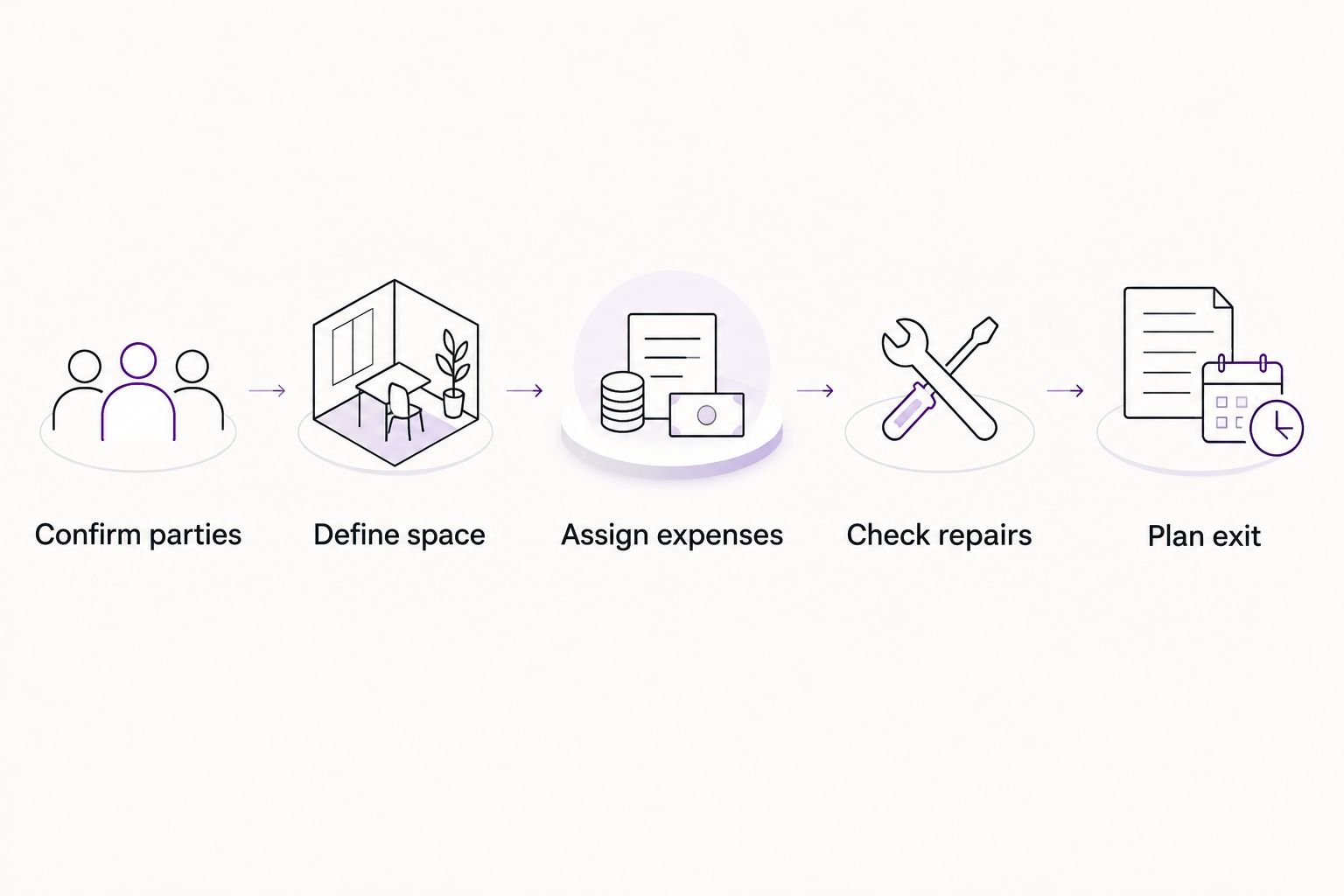
A template should make those decisions visible. If a clause is unclear, ask for an explanation and a written revision where needed; do not rely on the document's professional appearance.
Which business lease agreement template should you choose?
Start with a full-service gross lease template when predictable responsibilities are your main objective. Switch to modified gross when you have a negotiated expense split, and consider triple net only with a clear understanding of the assigned obligations. Use a commercial sublease when the existing tenant is the party granting occupancy.
For your 2026 shortlist, separate document preparation from legal review and business-launch work. MORSE LLC provides document-generation support alongside branding and website services; the supplied service description does not establish a lease-specific drafting or legal-review service.
If opening a location also requires a new brand or website, prepare that brief separately. Work directly with Julian on the business presentation, with scope discussed around your budget and timeline. Keep the lease decision with the appropriate property and legal advisers.
FAQ
What's the best business lease agreement template for a solo owner?
A full-service gross lease template is the default shortlist choice when predictable expense responsibilities matter most. It still needs explicit expense definitions, suitable permitted-use language, and review for the particular property and jurisdiction.
Is a modified gross lease better than a triple-net lease?
Neither structure is automatically better. A modified gross lease records a negotiated expense split, while a triple-net lease generally assigns taxes, insurance, and maintenance expenses to the tenant; compare the actual obligations before deciding.
Can I use a residential lease template for my business premises?
Use a commercial lease template for commercial premises rather than repurposing a residential form. Commercial occupancy needs provisions addressing the business use, operating responsibilities, alterations, and other terms specific to the arrangement.
What should I check before signing a commercial sublease?
Review the proposed sublease alongside the original lease and any required landlord consent. Check permitted use, access, the remaining term, and what happens if the original lease ends or the original tenant defaults.
Does a document generator make a business lease legally suitable?
A document generator does not establish that a lease is legally suitable for your circumstances. It helps prepare text, but property-specific terms, local requirements, and negotiated obligations still need appropriate review.
Should I get legal review before signing a business lease in 2026?
Get qualified legal review before signing a business lease, particularly when repair obligations, guarantees, expense allocations, or termination provisions are unclear. Bring the complete agreement, referenced schedules, amendments, and your intended use of the space.
Can MORSE LLC help with my business launch beyond documents?
MORSE LLC provides branding, website development, marketing, automation, and a document-generation tool for small business owners. You work directly with Julian, with the service scope discussed around your budget and timeline; those services are separate from legal advice.
One last thing
A lease can describe your permitted use narrowly. Before you commit, compare that clause with the services you plan to advertise, the customers you expect to receive, and any activities you intend to add. A space that looks right still needs terms that fit how your business operates.